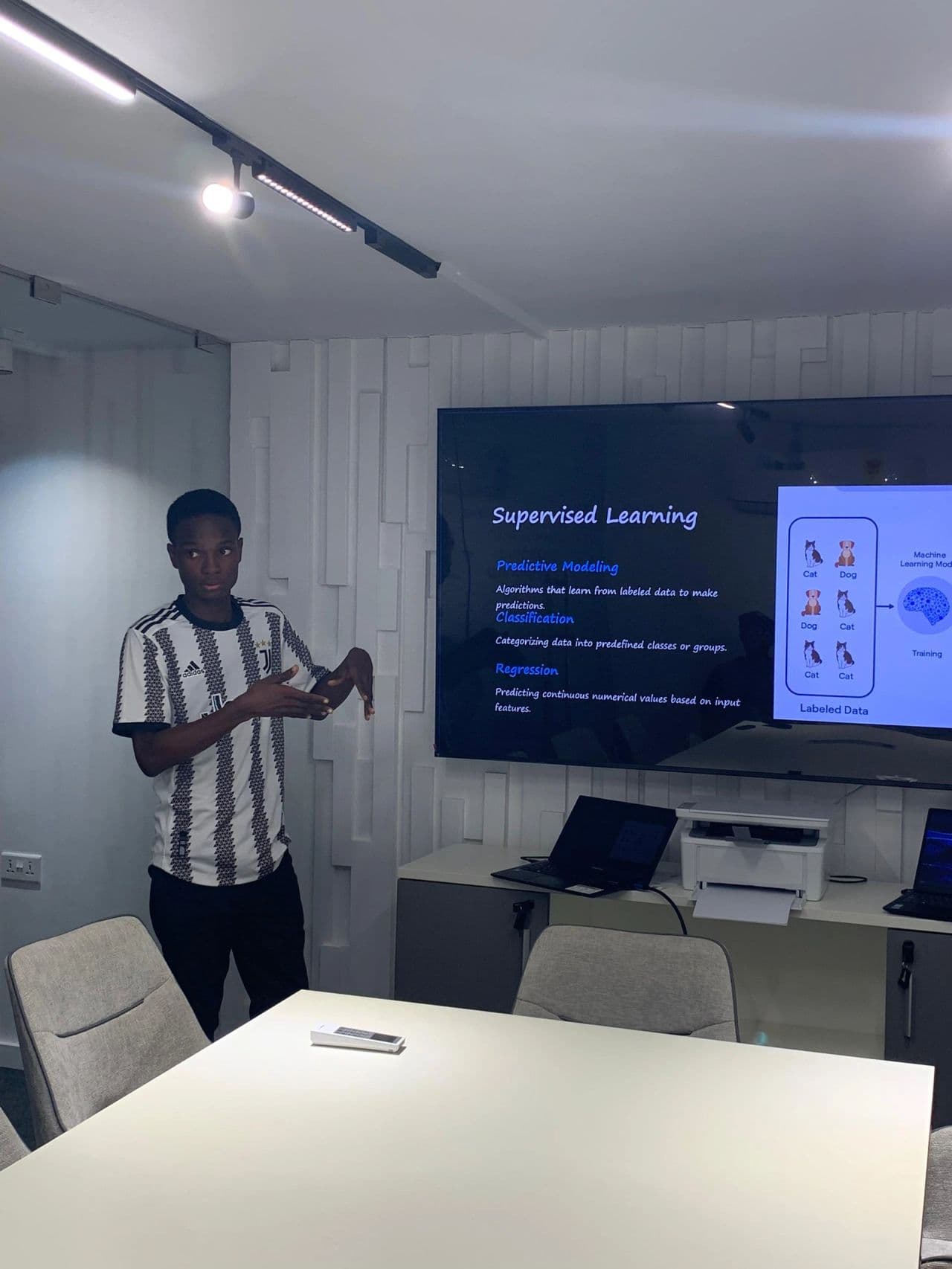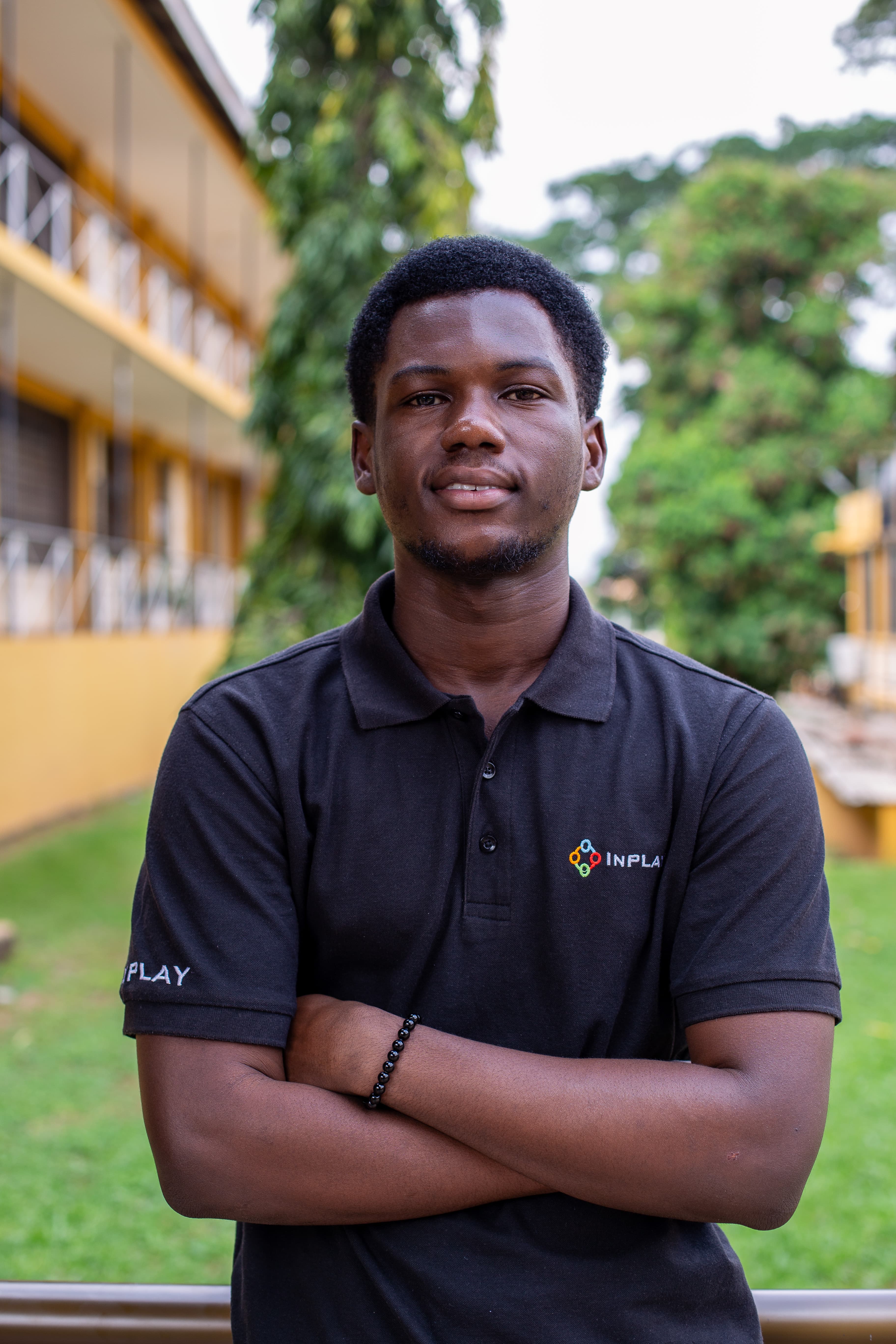
Panford Yeboah came into the sprint able to write code. He left able to ship systems.
Like many undergraduates across Africa, Panford had built plenty of class projects but had never taken anything to production. When nGOT Giants opened applications for its 10-Day AI/ML & Agentic Systems Sprint, he applied — not entirely sure he was ready for twelve-hour build days.
“The first morning made it clear this was not a tutorial,” he says. “We were expected to design, build, test, and deploy — the way an engineer actually works.”
Day Three: A Containerised ETA Predictor
The early days were about MLOps fundamentals. Panford built a containerised ETA-prediction service, moving from a notebook to a real REST API. The stack was deliberately production-grade: Poetry for dependencies, Pydantic V2 for validation, Docker for packaging, MLflow for experiment tracking, and gradient-boosting and random-forest models under the hood.
“Learning to reproduce a run, track experiments, and hand someone a container that just works — that changed how I think about software,” he says.
Building a Medical-Literature RAG System
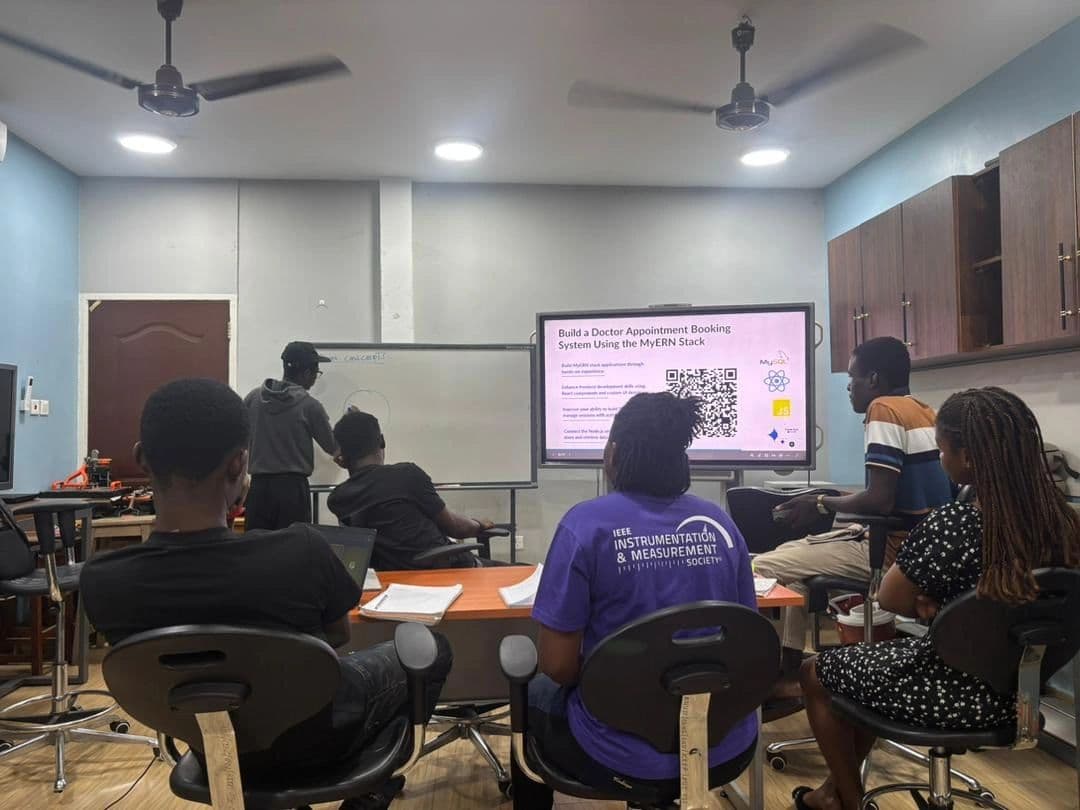
By the middle of the sprint, the challenge escalated: a Retrieval-Augmented Generation system over medical literature. That meant document ingestion, chunking, embeddings, vector retrieval, and generation — wired together behind a FastAPI service, with OpenAI embeddings and a Pinecone vector store.
Crucially, the Giants did not stop at ‘it works.’ They evaluated retrieval precision and latency, and iterated on chunking and retrieval strategies until the numbers improved.
Before the sprint, Panford had never deployed a service or measured a system's real-world performance.
By the end, he had shipped two — and could talk fluently about retrieval precision, latency budgets, and reproducible ML.
Research, Present, Build
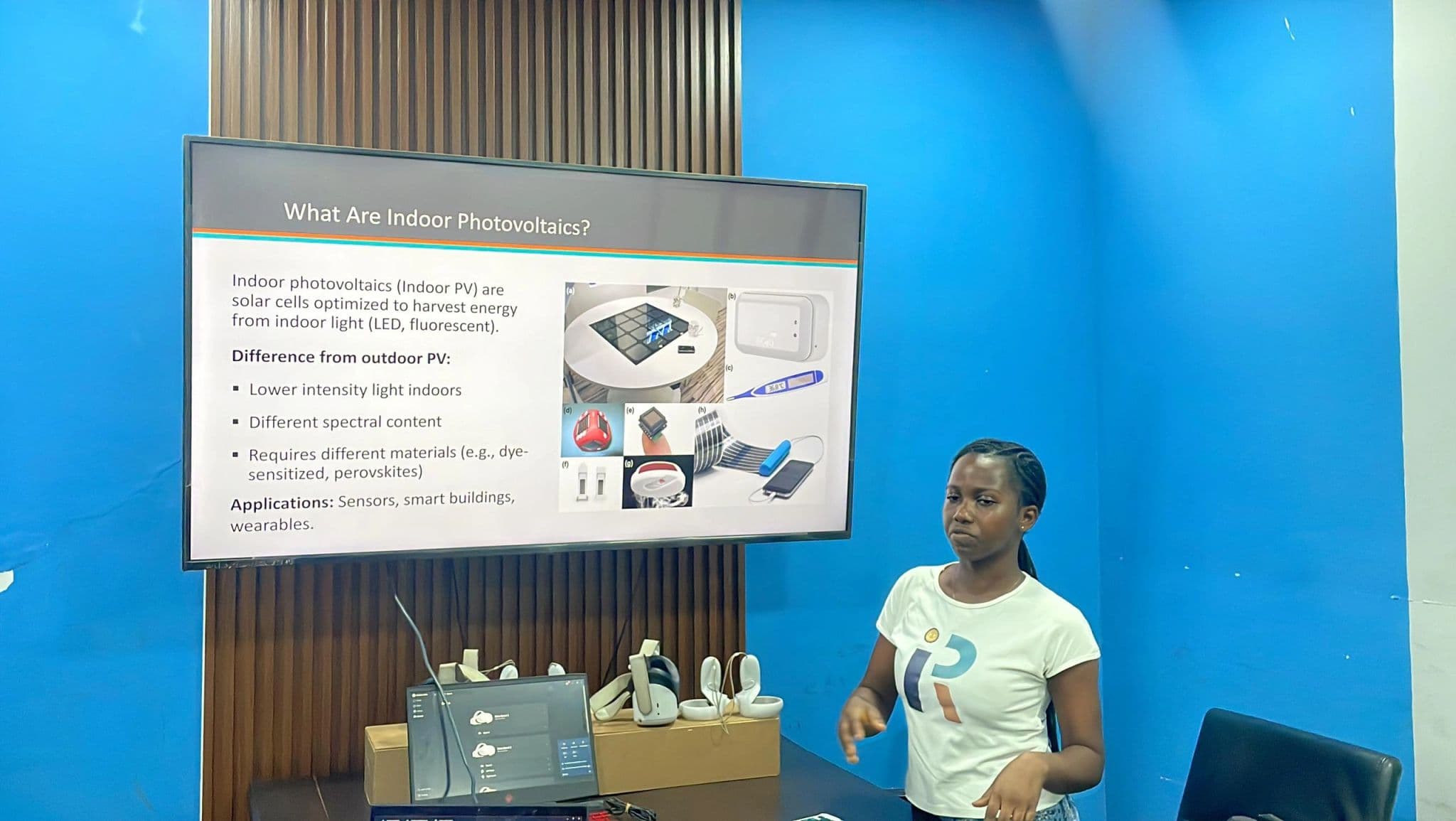
What surprised Panford most was nGOT's culture beyond the sprint. Every week, Giants Sessions ask members to research a frontier topic — Small Language Models, agentic AI, MRI safety, genomics — and present it to the community before building. “You read the frontier, you teach it, then you build it,” he says. “That loop is addictive.”
“Growth up-front matters as much as talent. People assume African students need permission to work on hard problems. nGOT just hands you the problem — and the support to solve it.”

Panford now works as a software engineer within the nGOT community, mentoring newer Giants and contributing to research tracks. He credits the sprint with turning abstract skills into an engineer's instinct.
“nGOT invests four years in every Giant. Ten days changed how I build; the community is changing where I'm going.”
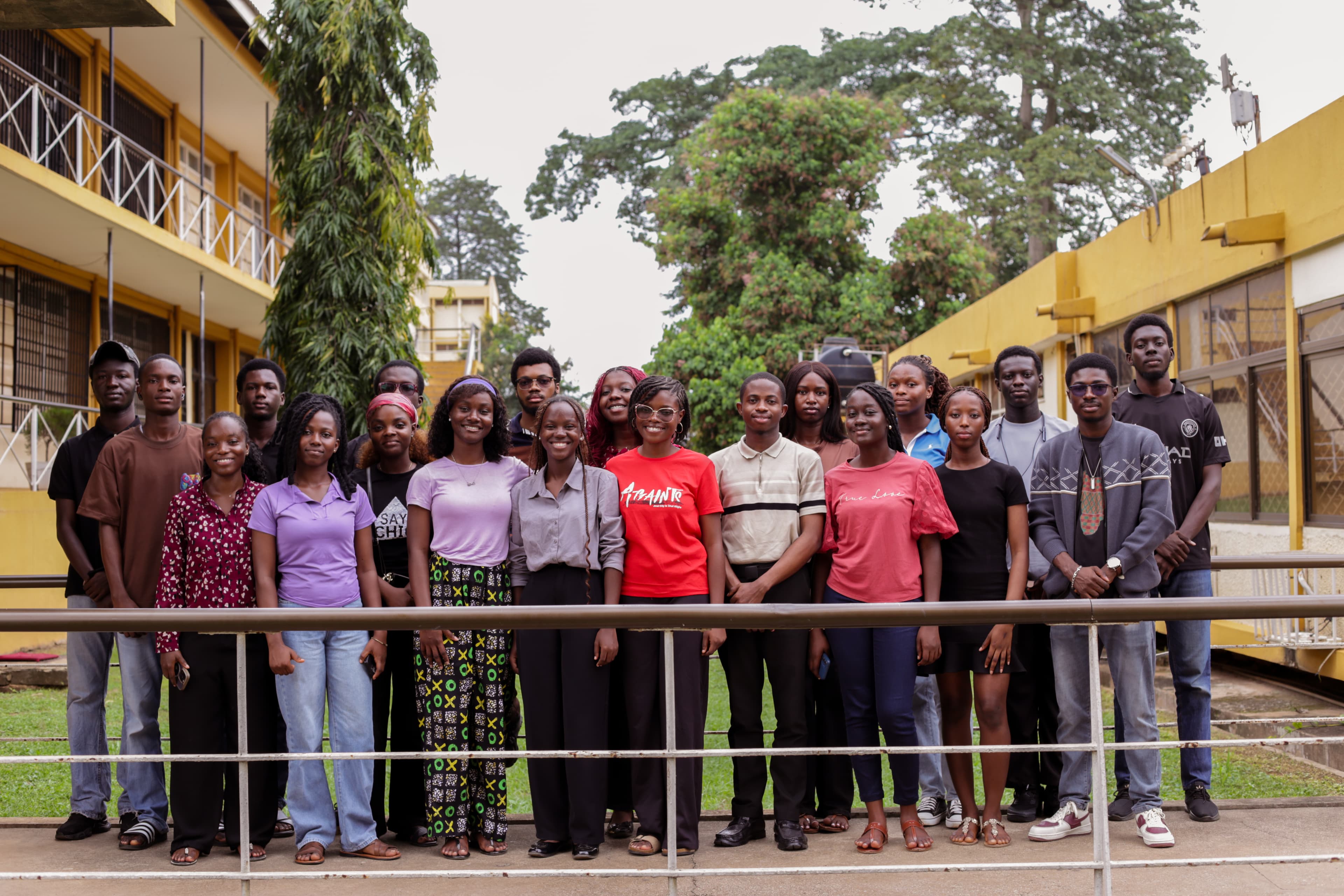
From a class-project coder to an ML engineer shipping evaluated systems, Panford is exactly the kind of globally competitive builder nGOT Giants set out to create — one of many in a community that already spans 16+ countries.